PAINT PROTECTION FILM · XPEL
The film takes the hit, so your paint doesn't.
A clear, hand-cut layer over the panels that catch the damage — the front end, the areas gravel and road debris actually reach. Cut to your car, on-site.
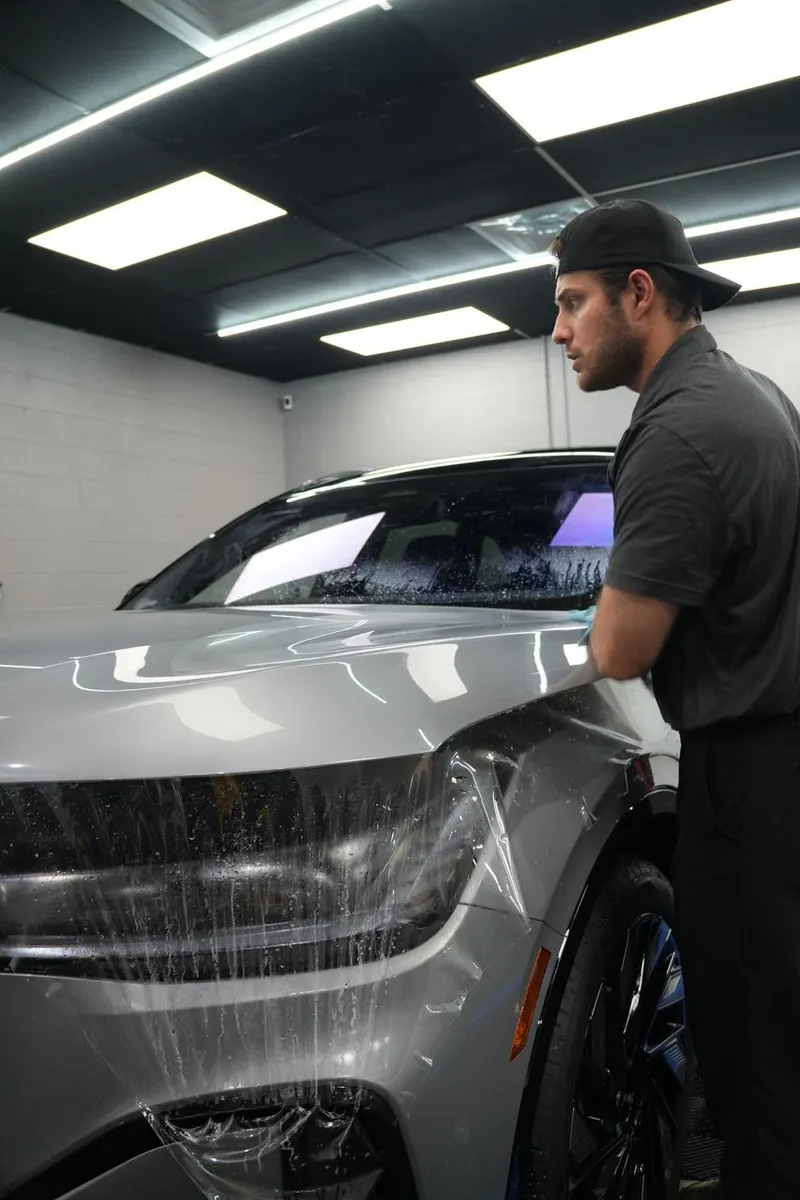
The edges
It comes down to the cut line.
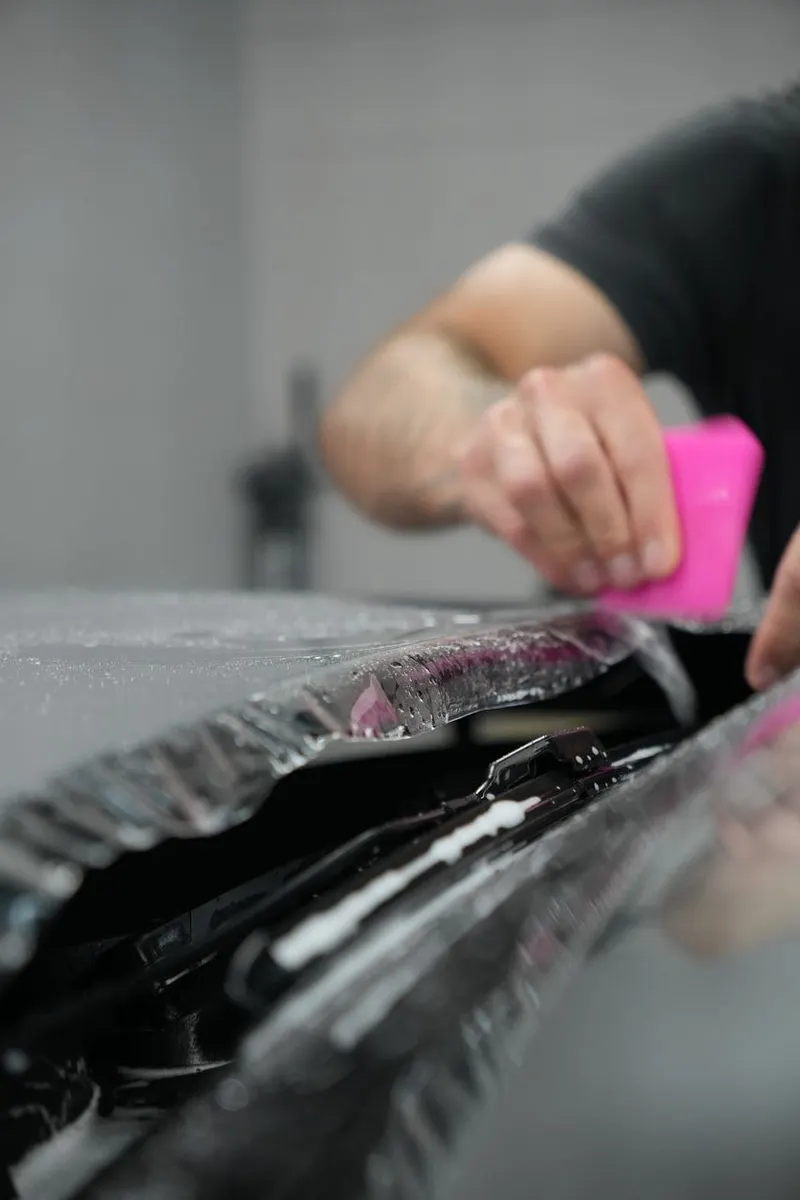
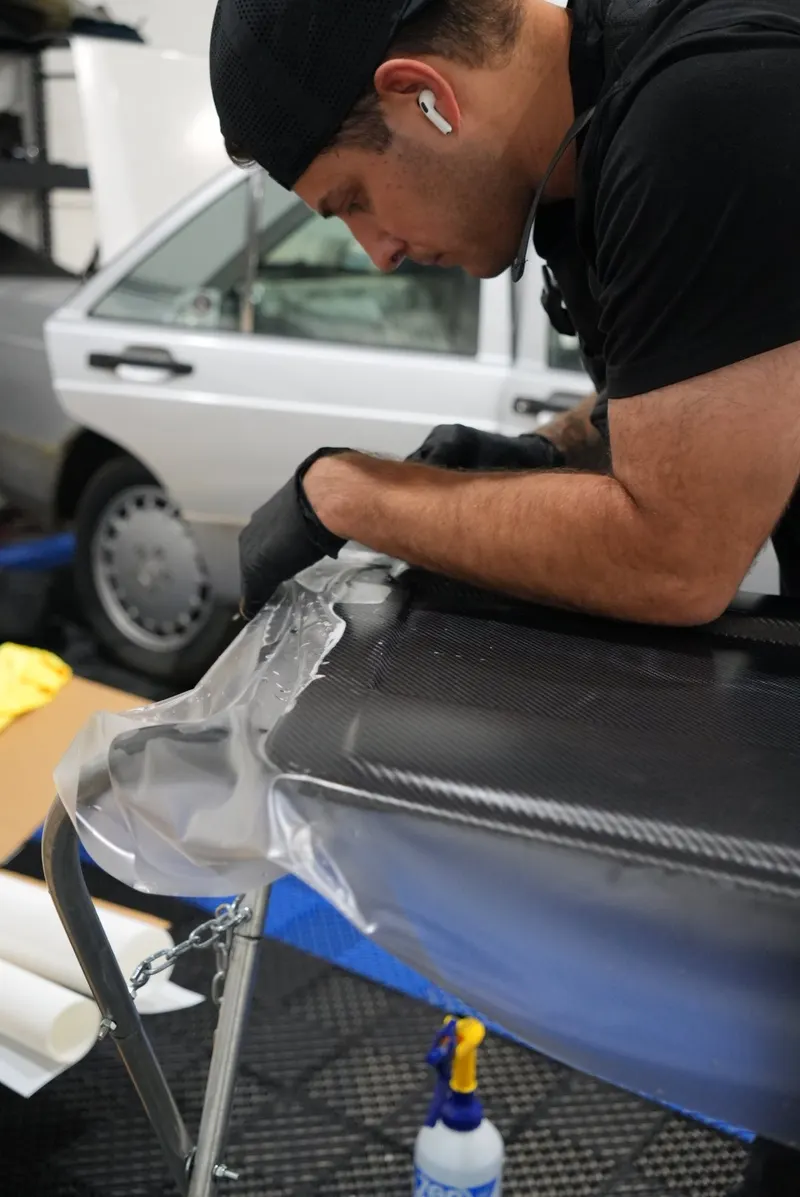
We hand-cut every piece to your car's actual panels, on-site — no pre-made kits, no template doing the work.
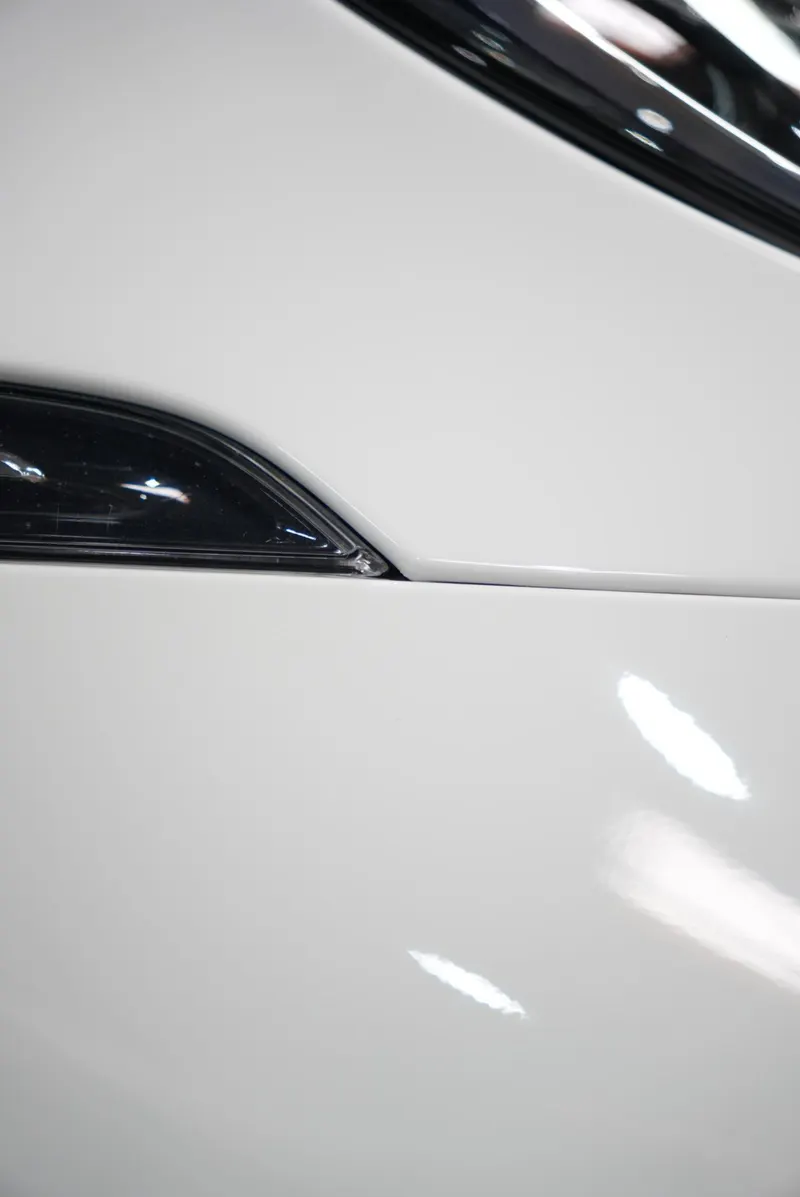
The cut line gets tucked tight into the panel edge, where a rushed or kit-cut job tends to leave a visible seam.
So the edge is finished the way it should be, and you can inspect it yourself before you leave. How well an edge holds up down the road comes down to that cut and to how the car's looked after — we'll be straight with you about both.
Before you book anywhere, check the edges. That's where the cut shows.
Self-healing
Self-healing, honestly.
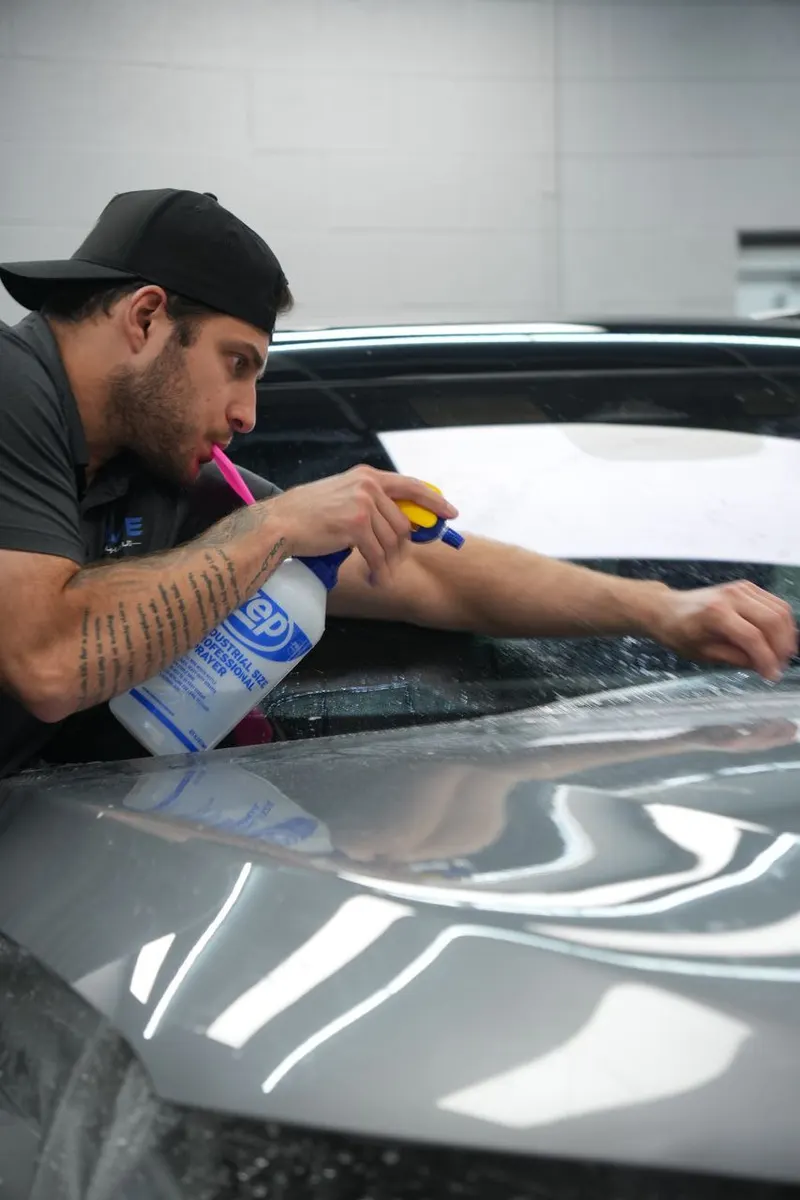
The film is a self-healing TPU — a top coat that re-flows when it warms up.
Light swirls and fine marring melt back out in the sun or with a little heat, instead of staying etched in your clear coat.
The front end keeps looking clean with a lot less fuss — the everyday micro-scratches just don't accumulate the way they do on bare paint.
The honest version
Here's what film won't do.
Self-healing handles the light stuff. It will not stop a deep rock-chip gouge, and no film "lasts forever" or is scratch-proof — you've heard those lines and so have we. What good film does is take years of small hits that would otherwise land on your paint. If your real worry is something film can't help, we'll tell you that before you spend a dollar.
How much to cover
Start with the impact zone.
Most owners start with the impact zone — front bumper, hood leading edge, mirrors, and the areas debris actually reaches — and some go full-body. We'll walk the car with you and mark exactly what's worth covering for how you drive, and what isn't.
What's on the paperwork
Backed by XPEL, not just by us.
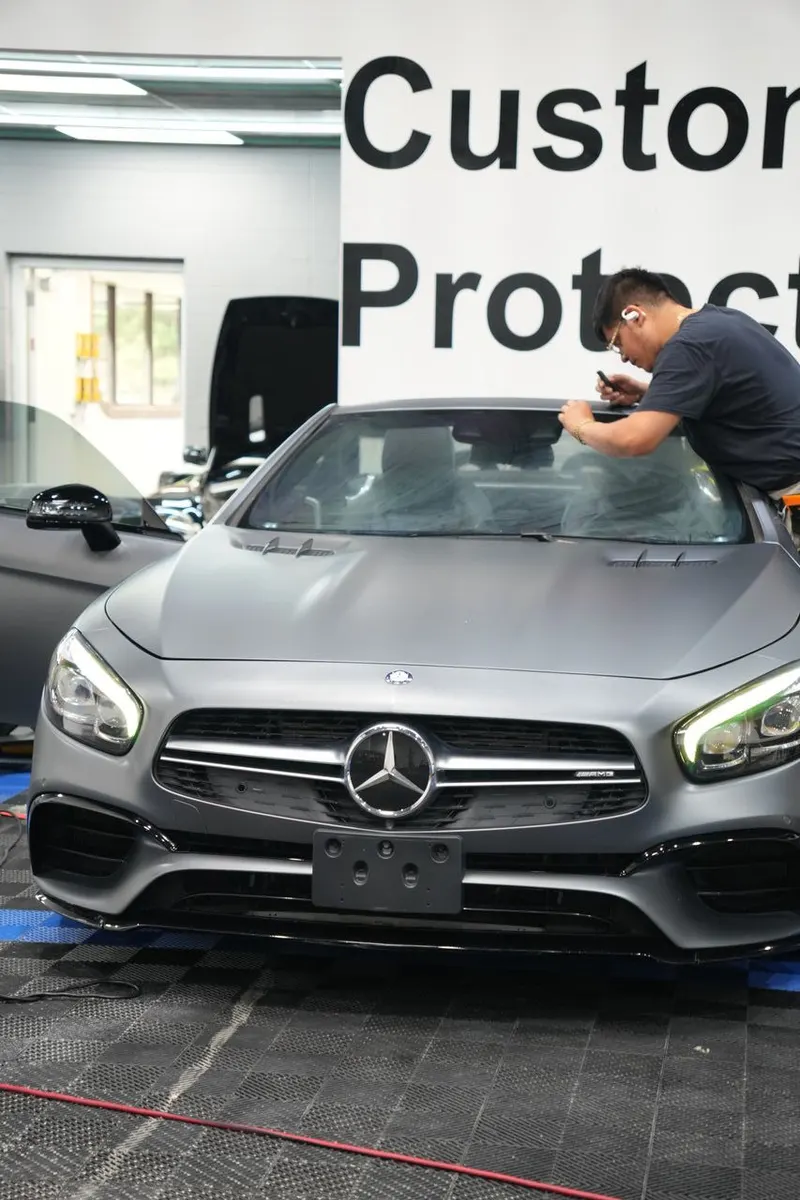
As a certified XPEL installer, every film job carries XPEL's own manufacturer backing against defects like yellowing, cracking, and delamination. We'll walk you through exactly what that covers, in plain terms, before you book.
When to do it
The best time is before the first real drive.
If the car's new, the ideal moment is before the first real drive — the paint is as clean as it will ever be, and the chips haven't started. Already been driving it a while? Still worth doing; we just correct anything that's crept in first. (Advice, not a countdown.)
Film + ceramic
Film and ceramic do different jobs.
Film takes the physical hits on the impact areas. Ceramic keeps the whole car glossy and easy to clean. The honest setup is the two together — but if you only need one, we'll tell you which.